Is AI Replacing Developer Jobs? What Changed in the Hiring Bar, Not the Headcount
CareerCTO14 min read
AI tools did not remove junior developer jobs, they removed the tasks that used to teach juniors on the job. Companies now expect a new hire to already handle judgment work that used to come with a year of mentoring, so preparation has to happen before you apply, not after.
Every few months someone posts a chart showing entry-level postings falling and calls it proof that AI is finishing off the junior developer. Someone else replies that AI is just a tool, panic is overblown, and juniors will always be needed.
Both readings miss what is actually happening on the hiring side. Nobody removed the junior developer job itself. What moved is the line for what counts as ready to be hired into one.
Tasks that used to be the first six months of a junior's job are now done faster by AI tools than most trainees can do them. Writing boilerplate, wiring up simple CRUD screens, fixing small bugs under supervision - that was the on-ramp.
That on-ramp did not vanish by accident. It got automated, and companies stopped paying someone to learn on it while they figured out the rest of the job. This piece describes what hiring managers now check for before they will interview a junior candidate, and what you can do about it before you apply.
What AI coding tools actually took over
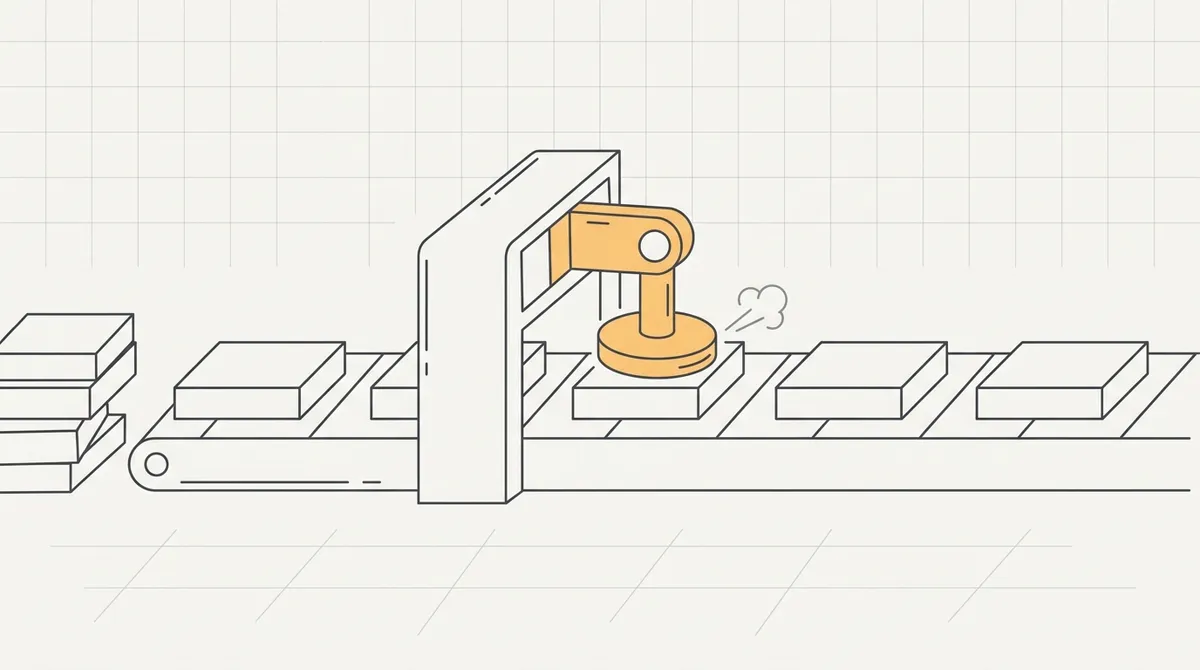
Tools like Copilot, Cursor, and various AI coding agents are good at a specific band of work. That band is code that has been written thousands of times before in some recognizable form.
A login form, a paginated list, a REST endpoint that maps to a database table, a test scaffold, a docstring. That band of work used to be exactly what a fresh graduate was handed in their first weeks on the job.
It is not that AI writes better code than a senior engineer would. It is that AI produces an acceptable first draft faster than a junior can, for the specific kind of task juniors used to be assigned.
A team lead with an AI tool can now produce and review that first draft themselves in less time than it takes to onboard, explain, and correct a new hire's attempt at the same task. That changes the math on hiring a junior at all.
If the reason to hire someone junior was "we need hands for the repetitive work," that reason is weaker than it was three years ago. It has not gone to zero, but it no longer carries the whole case on its own.
If the reason is "we need someone who can eventually own a feature with judgment," that reason still holds. But it changes what a junior candidate needs to show up already knowing, rather than what they can be taught later.
The hiring bar moved up, it did not disappear
Here is the part that gets lost in both the panic and the dismissal: companies are still hiring juniors. Fewer of them, and later in the funnel, but the role has not been erased.
What changed is where the bar sits. Three years ago, a junior candidate needed to show they could learn: solid fundamentals, a few projects, enthusiasm, and the ability to take direction.
The company absorbed the cost of turning that potential into a productive engineer over the first six to twelve months on the job. That absorption period is exactly what got shorter.
Today, a hiring manager weighing a junior candidate against an AI-assisted senior doing the same task wants proof that the junior can already do part of what used to be taught on the job. That proof shows up in a few specific places.
| What used to be enough | What is now expected before hire |
|---|---|
| Coursework and a capstone project | A project you can explain design decisions for, not just describe |
| "I can write clean code" | "I can review AI-generated code and catch what is wrong with it" |
| Familiarity with a language and framework | Comfort reading someone else's codebase and finding the relevant file fast |
| Willingness to learn Git | Actually shipping through a branch, PR, and review cycle, even solo |
| General problem-solving claims | A debugging story with a specific root cause, not a symptom fix |
None of this requires years of professional experience to build. It requires having practiced the judgment layer of the job before someone is paying you to practice it.
That is a real shift in what "entry-level" means. It is worth taking seriously instead of arguing about whether it feels fair, because the argument does not change what interviewers are asking for.
Why "just learn to code" is no longer the whole answer

The advice a junior got in 2019 was largely: learn a stack, build projects, apply widely, interview well. That advice is not wrong today, but it is incomplete.
It assumes the scarce skill is writing code from a blank file. That is precisely the part AI now does adequately on its own, so it is no longer the thing that separates a hired candidate from a rejected one.
The scarce skill has shifted toward reading code, especially code you did not write yourself. Can you open an AI-generated pull request and tell whether the SQL query it wrote will scale under load?
Can you tell whether the error handling in it is real or just cosmetic, or whether the test it added actually exercises the failure case it claims to cover? That is a different muscle than writing a function from scratch.
Most bootcamp curricula and university coursework do not train this muscle directly, because it assumes you already have a codebase to practice on. Building that habit is now part of your own preparation, not something a course hands you.
If you are early in your career, the highest-leverage thing you can practice is not another tutorial project. It is taking an existing codebase and finding the bug, explaining the trade-off, or extending it without breaking what is already there.
If you are choosing a learning path right now, a plan like a full-stack roadmap for .NET developers is still useful groundwork for the fundamentals. Treat the roadmap as step one, not the whole preparation.
What "AI literacy" actually means to a hiring manager
The phrase gets thrown around loosely in job postings, so it is worth being concrete about it. A hiring manager checking for AI literacy in a junior candidate is not asking whether you have used ChatGPT.
Almost everyone has by now, so that alone tells an interviewer nothing useful. They are checking for three narrower things instead, and each one is testable in a normal conversation.
First, can you use an AI tool to move faster without losing track of what the code actually does underneath. Second, do you verify AI output before you ship it, instead of pasting it in and hoping.
Third, do you know when a task is one you should just do yourself, because the AI keeps getting it subtly wrong in ways that are expensive to catch later. Candidates who cannot answer these read as a risk.
The risk a hiring manager is picturing is someone who will ship AI output they do not fully understand, and then be unable to debug it when it breaks in production. That is a costly hire, not a cheap one.
A concrete version of this test: an interviewer pastes in an AI-generated function that handles pagination and asks what happens when the page size is zero. Candidates who only skimmed the output guess. Candidates who actually verified it can point to the exact line that breaks.
You do not need a certificate for any of this. You need to have actually done it: built something with an AI tool's help, hit a place where it was confidently wrong, and fixed it yourself.
That story, told specifically and with real detail, does more work in an interview than a list of tools you claim to have "used." Specificity is the whole signal here.
Why layoffs and juniors got tangled together
Part of the panic around junior hiring comes from a separate but overlapping trend: layoffs and hiring freezes across the wider tech industry. This is especially visible in India's outsourcing and services sector right now.
Those cuts are driven by client budgets, offshoring shifts, and margin pressure as much as by AI adoption. They hit experienced staff too, not only juniors, which is a different problem with a different cause.
It is worth untangling the two, because the right response is different depending on which one you are actually facing. If you want the fuller picture of what is driving cuts and freezes in Indian IT, including where hiring is still active, the breakdown of IT company layoffs in India covers that separately from the AI-and-juniors story here.
Conflating the two leads to two opposite mistakes. One is overreacting to what is actually a normal market cycle in a specific sector. The other is underreacting to a real, structural skill-bar shift that will not reverse on its own.
What this means if you have zero professional experience
If you are trying to break in with no prior job on your resume, the calculus above is not abstract. It is the wall you are hitting directly, application after application.
The good news is that the fix does not require a job to get the missing signal. It requires deliberate, visible practice of the judgment skills described above, done on your own initiative.
Concretely: pick a small open-source project or a public codebase in your target stack and read it before you touch it at all. Understand what it does and why it is structured the way it is.
Find one real bug in it, fix it, and write up why the bug happened, not just what line you changed. The explanation of the cause is worth more than the fix itself in an interview.
Do this two or three times across different projects and you have interview material that a hiring manager cannot get from a bootcamp certificate. It shows the judgment layer directly instead of asserting it.
The guide to getting a job with no experience walks through building that kind of portfolio evidence step by step. It is a better use of your time right now than a fourth to-do list app.
A verified profile on a platform like CareerCTO's directory of graduates helps here too, but only as far as verification actually goes. It confirms you completed a specific cohort on a specific date, nothing more.
It does not substitute for the debugging story above. Employers reviewing profiles will still ask you to demonstrate the judgment skills directly, so treat verification as one input to your credibility, not the whole case.
What interviews are actually testing for now
If the bar has moved toward judgment and code review, interview formats are shifting to test for that directly. This changes how you should be spending your prep time before a first-round interview.
Expect fewer companies asking a candidate to write a sorting algorithm from memory on a whiteboard. Expect more interviewers wanting to see how you approach existing, slightly broken code and reason about it out loud.
Take-home tasks increasingly involve reviewing or extending a given codebase rather than writing one from a blank file. Some interviewers now hand you AI-generated code directly and ask what is wrong with it.
Systems-design questions probe how you would structure something for a team to maintain over time, not just whether it runs once during a demo. The maintenance question is doing most of the work now.
If you want a concrete sense of how technical interview processes are built and what they check for stage by stage, the walkthrough of how technical interview processes are designed is a useful reference before your next round.
The practical implication is that rehearsing algorithm puzzles in isolation is a weaker investment of your prep time than it used to be. Reading and reasoning about real code is closer to what the job will actually ask of you.
A realistic picture of what juniors still get hired to do
None of this means the junior developer role has quietly become senior work in disguise. There is still a real gap between what a junior and a senior engineer are expected to own on a team.
Companies that hire juniors well know that gap and staff for it deliberately, rather than pretending it does not exist or expecting a junior to close it alone in month one.
What junior work looks like now is less "here is a self-contained ticket, go write it" and more "here is a feature area, use the tools available, and show your reasoning as you go." The tasks are often the same shape as before.
The difference is that you are expected to arrive already comfortable with the tools and the review habits. You are no longer taught them from zero on the company's clock, the way a junior was in 2019.
Teams still investing in junior hires tend to be explicit about this in how they post roles and run interviews. They describe ownership and mentorship structure directly, not just a stack list of technologies.
That is a useful signal when you are choosing where to apply. It is one reason CareerCTO reviews every posting before it goes live on the board of reviewed job openings, so you are not guessing which listings reflect a real hiring plan.
For employers: hiring juniors is not obsolete, it is a different bet
If you run a small engineering team and are wondering whether junior hiring still makes sense with AI tools in the mix, the honest answer depends on what you are actually hiring for.
If your open role is "extra hands for routine tickets," that case has genuinely weakened over the last two years. You may be better served right now by an AI tool paired with a slightly heavier senior workload.
If your case is "we need a pipeline of people who will grow into ownership over two to three years," that case is intact. It is arguably more valuable now, since fewer companies are running it consistently.
Juniors who get real mentorship in this environment tend to compound into stronger mid-level hires than their peers did a few years ago, because the bar they cleared to get hired was higher to begin with.
The cost of that mentorship has shifted from "teaching syntax" to "teaching judgment." That takes a different kind of mentorship investment from a senior engineer, not necessarily more of it or less.
If you are posting a junior role, being specific about which of these two bets you are making, directly in the listing, filters candidates far better than a generic stack list ever did.
CareerCTO's post-a-job page is built around that kind of specificity. A reviewed posting that says what ownership actually looks like gets fewer mismatched applications than a vague one does.
How to read a junior candidate's profile differently now

For anyone on the hiring side reading resumes and profiles, the shift above means the signals worth weighing have changed too. A long list of frameworks is a weaker predictor than it used to be.
A completed course is also weaker signal than before, because that kind of information is now cheap to acquire with AI assistance over a single weekend, and most candidates have some version of it.
What is harder to fake, and worth weighing more heavily, is a specific account of a bug found and fixed. A design decision explained with real trade-offs is another one, if it holds up under a follow-up question.
Feedback a candidate actually incorporated into a project after review is a third. These require the candidate to have done the judgment work themselves, not just consumed material describing it.
Browsing CareerCTO's list of companies hiring shows a range of how different teams frame this in their own postings. It is worth a look if you want a sense of how peers are adjusting their listings.
Verification badges, including CareerCTO's, are a narrow but genuinely useful data point in this mix. They confirm a completed cohort on a specific date, and nothing about the self-reported skills sitting next to that badge.
Read the badge for exactly what it proves, and read the rest of the profile, especially the specifics, for everything else you actually need to know before you interview someone.
What to actually do next
If you are a student or a career-switcher reading this because you are worried, the useful response is not panic and it is not denial either. It is a short, concrete list of moves.
- Pick one real codebase, not a tutorial project, and read it end to end before you write anything in it.
- Fix one real bug in that codebase and write down the actual root cause, not just the symptom you patched.
- Practice explaining an AI tool's output out loud: what it got right, what you changed, and why you changed it.
- Ship something through a full branch, review, and merge cycle, even if you are reviewing your own work against a checklist.
- Build a profile that leads with the specifics above, not a stack list, whether that is a personal site or a verified directory entry.
None of these require a job to do. They require deliberate hours, and they are the exact hours that used to happen automatically during a junior's first months on a company's payroll.
Doing them before you apply, rather than hoping to pick them up on the job afterward, is the actual difference the AI shift has made to how you should prepare for your next application.
If you want to see what a reviewed listing looks like once you are ready to apply, CareerCTO's job board and its profile-building tools are a reasonable place to start putting this into practice.